Friday afternoon arrives. The phones get quieter. Employees head home. The office lights go off. Maybe you’re thinking about dinner, football, family, or simply getting a little rest before Monday arrives again. But one employee is still working. Your website.
It doesn’t take weekends off. It doesn’t go on vacation. It doesn’t call in sick. And it doesn’t complain about working at 2:00 in the morning. Your website represents your business 24 hours a day, seven days a week, 365 days a year. The question is: What is it doing with all those hours?
At DFW Website Designers, we’ve built more than 1,250 websites over the past 17 years. We’ve learned that the best business websites aren’t simply online brochures. They’re hardworking marketing tools. Here’s what your website should be doing while you’re doing something else.
Helping Customers Find You
Imagine it’s 10:30 Friday night. Someone’s air conditioner stops working. A water heater starts leaking. A homeowner notices a foundation problem. A business owner realizes their website desperately needs an update. They aren’t necessarily waiting until Monday morning to begin looking for help.
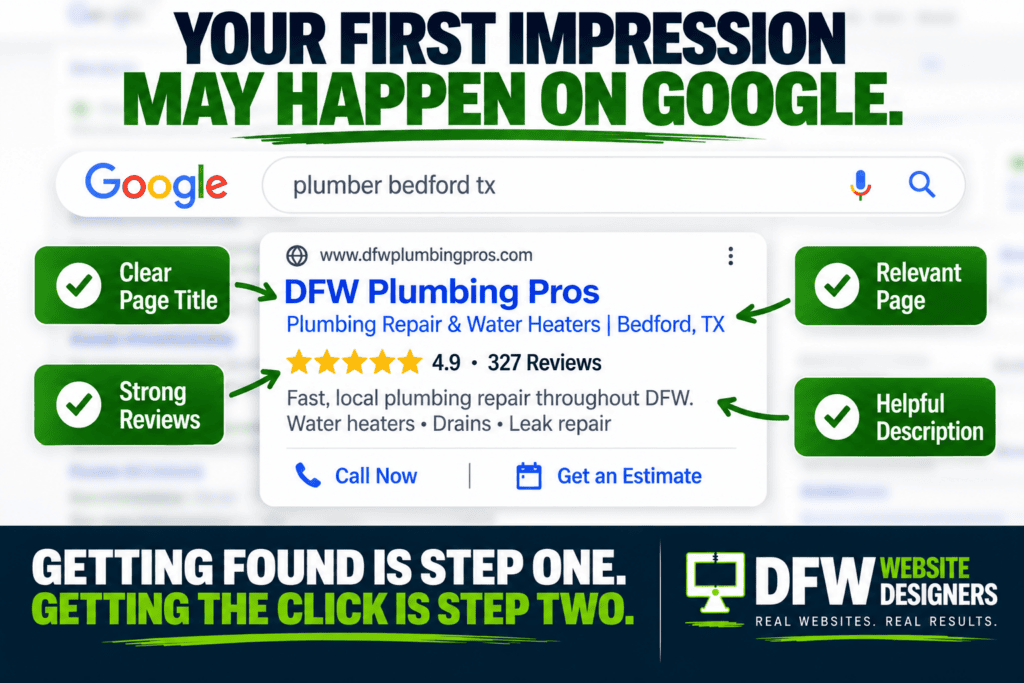
They’re searching now. That means your website needs to be ready when they are. Strong search visibility can come from many different pieces working together: Well-optimized service pages, Local city pages, Helpful blog content, Strong page titles, Meta descriptions, Internal linking, Schema markup, Google Business Profile optimization, Technical SEO, Proper indexing, & Your office may be closed. Search isn’t.
Making a Great First Impression
When someone discovers your company after hours, your website may be the only representative of your business available. What does that visitor see? A modern, professional company? Or a website that hasn’t been updated since everyone was still carrying a BlackBerry? First impressions matter.
Visitors are quickly evaluating things such as: Professional appearance, Mobile usability, Clear navigation, Current information, Quality photos, Customer reviews, Experience, Services offered & Areas served. Your website begins building—or losing—trust before anyone from your company ever speaks to the customer.
Answering Questions While You Sleep
Here’s one of the greatest advantages of a good website. It can answer the same questions hundreds of times without anyone on your staff having to answer them. Customers might want to know: What services do you provide? What areas do you serve? Do you provide free estimates? How long have you been in business? Do you offer financing? Are you licensed and insured? What does the process look like? How can I schedule an appointment?
Good service pages, FAQs, blog articles, and other helpful content can provide those answers immediately. That means someone can learn about your business at midnight without waiting until Monday morning to call.
Building Trust Before the First Conversation
Think about the last time you considered hiring a company you didn’t know. You probably did a little research first. Your customers do the same thing. Before contacting you, they may look for: Google reviews, Testimonials, Project photos, Before-and-after images, Team photos, Years in business, Certifications, Awards, Professional affiliations, & Community involvement.
They’re trying to answer a simple question: Can I trust these people? Your website should help answer that question. By the time someone calls your office, they may have already spent ten minutes deciding whether your company belongs on their shortlist.
Collecting Leads After Hours
What happens when someone visits your website at 9:00 Saturday night? Do they have to remember to call Monday? Hopefully not. Your website should provide ways for customers to take action immediately.
That could include: Contact forms, Request-a-quote forms, Online appointment scheduling, Click-to-call buttons, Email inquiries, Live chat, & AI-powered customer support. The easier you make it to take the next step, the less likely a potential customer is to disappear. Someone who is interested tonight may find another company tomorrow. Capture the opportunity while they’re interested.
Your Website Should Work on a Phone
After-hours browsing often happens from the couch, a restaurant, a child’s soccer game, or anywhere else someone happens to be holding a phone. That means your mobile experience matters. A customer should easily be able to: Read your content, Navigate your menu, View your services, Tap your phone number, Complete a form, Request a quote, Find your location & Read reviews.
A website that works beautifully on a desktop but becomes frustrating on a phone isn’t working 24/7. It’s working part-time.
Your Content Keeps Working Long After You Publish It
This is one of my favorite things about website content. You write a useful article once. Then it keeps working. A blog post published today could potentially be discovered: Next week. Next month. Next year. The same applies to: Service pages, City pages, FAQs, Resource articles, & Project pages. Every useful page becomes another door into your website.
The more helpful doors you create, the more opportunities customers have to discover your business.
Your Website Supports Your Sales Team
A good website doesn’t replace your sales process. It makes the sales process easier. Imagine two potential customers. The first knows almost nothing about your company before calling. The second has already: Read your About page, Reviewed your services, Looked through customer testimonials, Read two blog articles, Viewed your project gallery, & Learned how long you’ve been in business.
Which conversation starts further down the sales funnel? Probably the second one. Your website can educate potential customers before your team ever speaks with them.
Your Website Can Support Your Google Business Profile
For many local businesses, a customer may first discover the company through its Google Business Profile. They see: Reviews, Photos, Business information, Hours, Location & Services. Then they click the website. Those two marketing tools should reinforce each other.
The business name, phone number, address, services, and other important information should be accurate and consistent. Your Google Business Profile helps customers discover you. Your website helps convince them.
Your Website Can Help AI Understand Your Business
The way customers search is continuing to evolve. People aren’t only typing keywords into traditional search engines anymore. They’re asking conversational questions through AI-powered tools. Questions like: “Who is a good website designer near me?” “Recommend a plumber in Fort Worth.” “Who can repair my irrigation system?”
That makes clear website organization increasingly important. Modern websites should clearly communicate: Business information, Services, Locations, Expertise, Frequently asked questions & Helpful educational content.
Structured data, strong technical SEO, logical internal linking, and other AI-readiness improvements can help make your website easier for modern search technologies to interpret. The technology changes. The fundamental goal doesn’t: Make your business easy to find and easy to understand.
But Your Website Needs Maintenance Too
Here’s the catch. Even your hardest-working employee needs a little attention. Websites develop problems over time. Links break. Information becomes outdated. Plugins need updates. Images become oversized. Services change. Employees change. Search engines change. Customer expectations change. That’s why websites should be reviewed periodically.
A website shouldn’t be something you build and ignore for the next ten years. It should evolve with your business.
Don’t Make Your Website Work With One Hand Tied Behind Its Back
Imagine hiring a salesperson and then giving them: No training. Outdated brochures. The wrong phone number. Old pricing. Incomplete service information. Then you wonder why they aren’t producing. That’s essentially what happens when businesses neglect their websites. Your website can only work with the information and tools you give it.
Keep it updated. Give it useful content. Make it fast. Make it easy to navigate. Make contacting you simple. Give it every opportunity to succeed.
The Best Website Works While You Don’t
There’s something pretty nice about waking up Monday morning and finding: A new contact form submission. A quote request. An appointment. A new customer inquiry. Those leads didn’t necessarily happen because someone was sitting at a desk answering phones. They happened because your marketing continued working when you weren’t.
That’s leverage. And that’s exactly what a good business website should provide.
Final Thoughts
You work hard enough. Your website should carry some of the load. While you’re meeting customers, it should be educating prospects. While you’re driving home, it should be showing up in searches. While you’re eating dinner, it should be building trust.
And while you’re enjoying the weekend, it should still be helping potential customers discover your business. Website working. Leads coming in. Business growing. More time for what matters. That’s a website doing its job.
Is Your Website Working This Weekend?
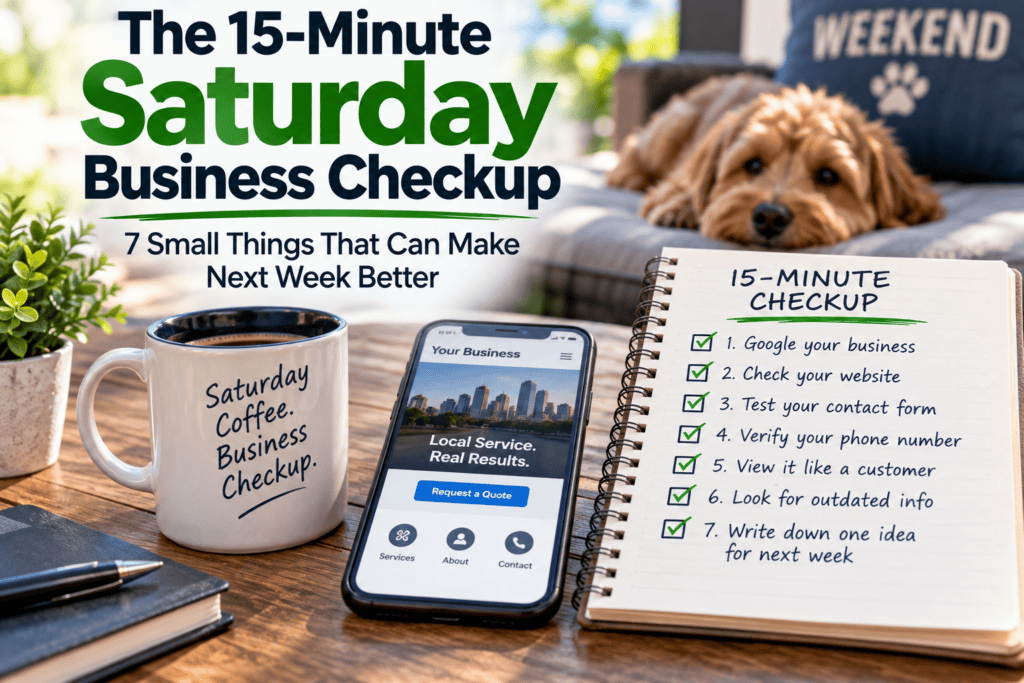
Take five minutes and look at your website like a potential customer. Can you quickly understand what the company does? Can you easily find the phone number? Can you request a quote? Does everything work properly on your phone? Does the website build trust? Can customers find answers without calling?
If you’re not sure, our FREE Search-Ready Tune-Up can help. At DFW Website Designers, we’ll review your website for opportunities involving SEO, mobile usability, conversions, technical performance, indexing, content, local search, and AI search readiness. Because your website never clocks out. Let’s make sure it’s doing something productive while it’s working.