You get up early. You answer emails. You return phone calls. You meet customers. You prepare estimates. You solve problems. You market your business. You probably think about work even when you’re technically not working. But what about your website? Is it working as hard as you are?
At DFW Website Designers, we’ve built more than 1,250 websites over the past 17 years, and one thing we’ve learned is that a website shouldn’t simply sit online looking pretty. It should have a job. Actually, it should have several jobs. Your website should help people find your business, understand what you do, trust your company, and take the next step toward becoming a customer.
And it should be doing those things 24 hours a day, seven days a week.
Your Website Should Be Your Hardest-Working Employee
Imagine hiring a salesperson who worked around the clock. They never took a vacation. Never called in sick. Never went to lunch. Never complained about working weekends. Every time a potential customer had a question, they were ready to help. That’s essentially what a good website can become.
While you’re sleeping, someone may be searching Google for exactly what your company provides. Your website should be there waiting for them. But simply having a website isn’t enough. It needs to work.
Job #1: Help Customers Find You
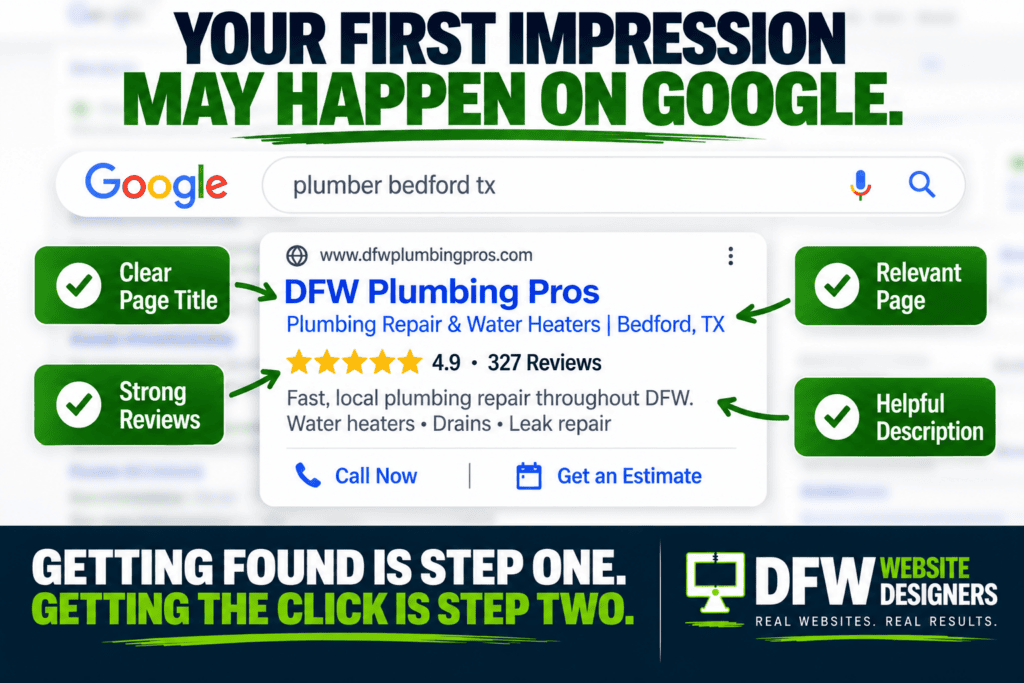
Your website can’t generate leads if nobody sees it. That’s why search visibility matters. A hardworking website should clearly tell search engines:
- What your business does
- Where you’re located
- What services you provide
- What cities you serve
- What questions you can answer
- Why your business is relevant to a customer’s search
That’s where good SEO begins. Service pages, city pages, helpful blog articles, internal linking, page titles, schema markup, and your Google Business Profile all work together to increase your opportunities to be found. A beautiful website that nobody can find isn’t doing its job.
Job #2: Make a Strong First Impression
When someone finds your website, you don’t have much time. Within seconds, visitors begin forming opinions about your company. Does the website look professional? Does the company appear established? Does the business seem trustworthy? Is the information current? Does everything work properly on a phone?
People may never consciously ask those questions. But they’re making those judgments almost immediately. Your website doesn’t need to be flashy. It needs to make visitors feel confident that they’ve found the right company.
Job #3: Explain Exactly What You Do
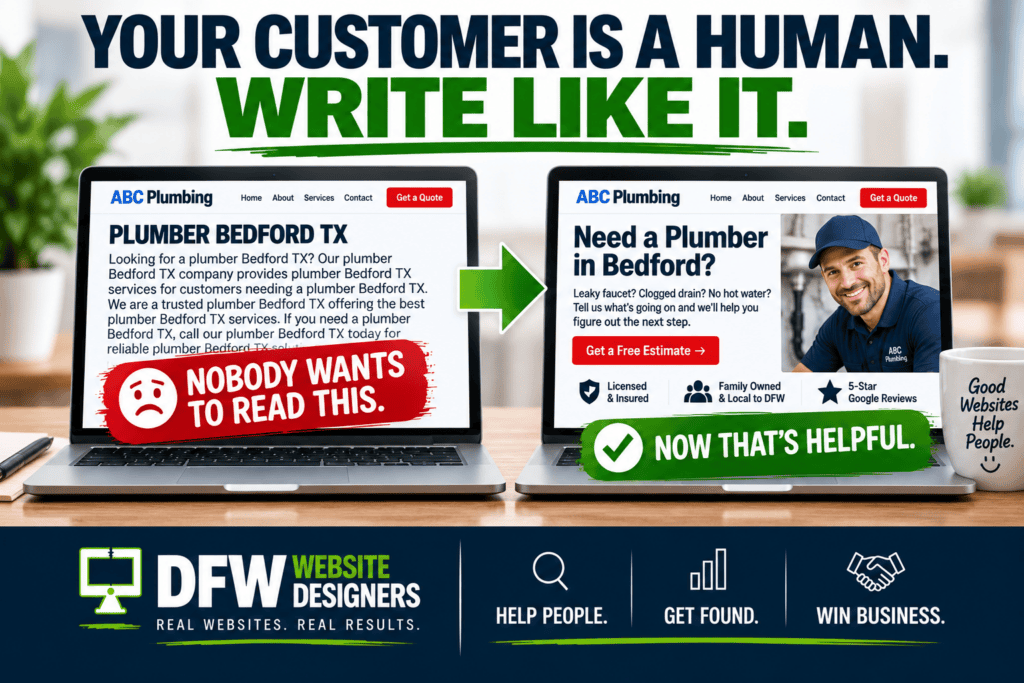
Never make customers guess. A visitor should quickly understand: Who are you? What do you do? Where do you do it? Why should I choose you? We’ve seen plenty of attractive websites filled with clever marketing language that never clearly explain what the business actually does. Clarity wins.
If you’re a plumber in Bedford, say you’re a plumber serving Bedford and surrounding communities. If you repair air conditioners, explain the air-conditioning services you provide. If you build websites for small businesses, make that obvious. Your customers shouldn’t need a detective to understand your business.
Job #4: Answer Questions Before Someone Calls
Customers arrive at your website with questions. Depending on your business, they might want to know:
- How much does it cost?
- Do you provide free estimates?
- What areas do you serve?
- How quickly can you help?
- Are you licensed and insured?
- Do you offer financing?
- How long have you been in business?
- What happens after I contact you?
The more uncertainty you remove, the easier you make the buying decision. That’s why good service pages, FAQs, blogs, and educational content are so valuable. Your website can answer questions even when nobody at your office is available.
Job #5: Build Trust
People rarely hire a business simply because it exists. They hire businesses they trust. Your website should provide evidence that you’re capable of doing what you promise. That might include: Google reviews, Customer testimonials, Project photos, Before-and-after pictures, Years in business, Certifications, Awards, Team photos, Case studies, Professional affiliations, and Community involvement.
Don’t simply tell visitors you’re great. Give them reasons to believe it.
Job #6: Make Contacting You Ridiculously Easy
Here’s one of the simplest website improvements almost any business can make. Make it easier to contact you. Your website should prominently display: Phone number, Contact form, Request-a-quote button, Appointment scheduling, Email address when appropriate & Physical location when appropriate.
On mobile devices, your phone number should be clickable. Don’t make someone visit three pages to figure out how to reach you. If they’re ready to become a customer, get out of their way.
Job #7: Turn Visitors Into Leads
Traffic is nice. Leads are better. A website with 5,000 monthly visitors that generates five inquiries may be less valuable than a website with 500 visitors that generates 25. That’s why conversion matters. Every important page should have a logical next step.
That might be: Call Now, Request a Quote, Schedule an Appointment, Get a Free Estimate, Book Online, Contact Us & Learn More. Your website shouldn’t leave visitors wondering what they’re supposed to do next.
Job #8: Support Your Google Business Profile
For local businesses, your website and Google Business Profile should work together. Information should be accurate and consistent, including: Business name, Phone number, Address, Hours, Services, Website & Service areas.
Your Google Business Profile may introduce someone to your company. Your website often helps convince them to call. They’re not separate marketing tools. They’re teammates.
Job #9: Keep Working After the Initial Visit
Not every visitor is ready to buy today. That’s okay. Helpful content gives people reasons to remember your company and return later. Blog articles can answer questions. Project galleries can demonstrate experience. FAQs can remove concerns.
Social media can bring people back to your website. One useful article written today could continue attracting potential customers months—or even years—from now. That’s leverage. You do the work once. Your website keeps working.
Job #10: Be Ready for the Way Search Is Changing
Search isn’t standing still. Customers are still using Google, but they’re also asking questions through AI-powered search experiences and assistants. That makes clear, useful, well-organized content increasingly important. Your website should make it easy for search technologies to understand: Who you are, What you do, Where you operate, What you know, & What services you provide.
Traditional SEO fundamentals still matter. But businesses should also be thinking about how their information is structured, connected, and understood by newer search technologies. The goal is simple: Make your business easy to understand and easy to find—whether the customer begins with Google or an AI-powered search tool.
Small Improvements Add Up
Here’s the part many business owners miss. You don’t necessarily need to rebuild your entire website to make it work harder.
Sometimes improvement means:
- Rewriting one headline
- Adding a Call Now button
- Creating a missing service page
- Adding three city pages
- Compressing oversized images
- Fixing broken links
- Improving mobile navigation
- Adding schema markup
- Publishing a helpful article
- Updating old photos
- Adding recent reviews
One improvement may seem insignificant. But make one improvement today, another next week, and another the week after that. A year from now, you’ve built a much stronger marketing machine. A little progress today can lead to big results tomorrow.
Your Website Is Never Really Finished
We occasionally hear business owners say: “We finished our website.” We understand what they mean. The new website launched. But the best business websites are never truly finished. They’re constantly becoming better. New services are added. New questions are answered. New projects are photographed. New reviews arrive. New cities are targeted. New articles are published. New technologies emerge.
Customer expectations change. Your website should evolve right along with your business.
Final Thoughts
You work hard to grow your company. Your website should be working right beside you. It should help customers discover your business. It should answer their questions. It should build trust. It should demonstrate your experience. It should make contacting you easy. And ultimately, it should help turn visitors into customers. That’s when a website stops being an online brochure.
It becomes a business tool. And that’s the kind of website worth investing in.
Could Your Website Be Working Harder?
At DFW Website Designers, our FREE Search-Ready Tune-Up is designed to help answer that question. We’ll review your existing website and look for opportunities involving SEO, mobile usability, content, conversions, indexing, technical issues, local search, and AI search readiness.
You may need a redesign. You may not. Sometimes a handful of smart improvements is all it takes to make your existing website work considerably harder for your business. Better websites help build stronger businesses. Let’s make yours work harder.