Your website looks professional. The colors are right. The photos look good. Your services are listed. Everything seems to work. There’s just one problem. The phone isn’t ringing.
This is one of the most frustrating situations for a business owner. You’ve invested time and money into your website, and from the outside, everything appears fine. But a good-looking website and a high-performing website aren’t always the same thing.
At DFW Website Designers, we’ve built more than 1,250 websites over the past 17 years, and we’ve learned something important: Some of the biggest website problems are the ones you can’t see. Here are some of the hidden issues that may be keeping a great-looking website from generating the leads it should.
1. Customers Can’t Find It
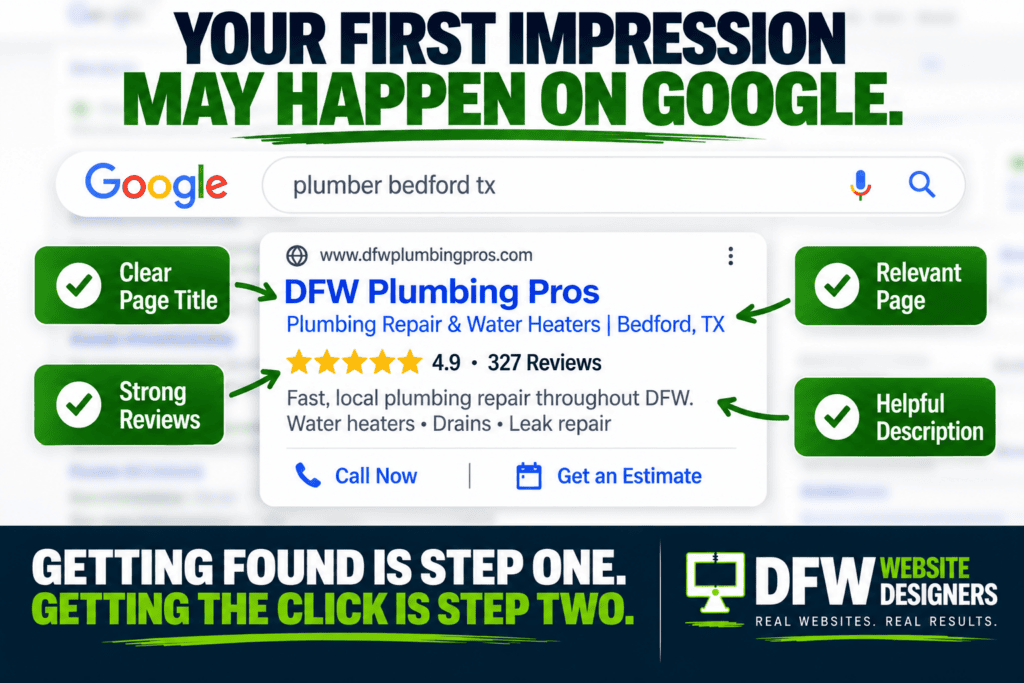
Before your website can generate a lead, someone has to find it. A beautiful website buried on page five of Google isn’t going to generate much business. Search visibility depends on far more than design.
We look at things such as:
- Page titles
- Meta descriptions
- Service pages
- City pages
- Internal linking
- Schema markup
- Google Business Profile
- Google Search Console
- Indexing
- Helpful content
Your website may look fantastic to a customer while providing very little information to a search engine. That’s a problem.
2. Your Website Doesn’t Clearly Explain What You Do
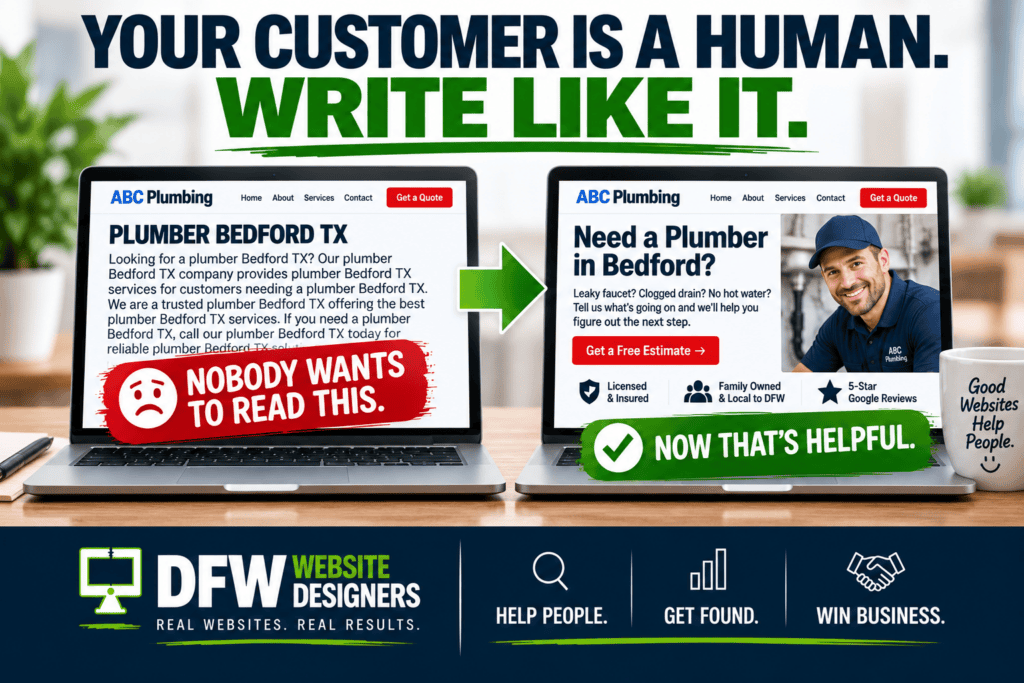
Business owners sometimes assume visitors already understand their company. They don’t. Someone landing on your homepage should be able to determine within seconds: What you do, Who you serve, Where you provide services, Why they should choose you, How to contact you, Clever headlines can look impressive. Clear headlines generate leads.
If a visitor has to study your website to figure out what your company actually does, you’ve already made the sales process harder.
3. Your Phone Number Is Too Hard to Find
This sounds ridiculously simple. Yet we see it all the time. A potential customer wants to call the business but has to hunt for the phone number. Don’t make them work for it.
Your phone number should be easy to find in places such as: Website header, Mobile navigation, Footer, Contact page, Service pages, & Calls-to-action. On mobile devices, it should be clickable. Every unnecessary step creates another opportunity for someone to leave.
4. Your Calls-to-Action Are Too Weak
What should someone do after reading your page? Call? Request a quote? Schedule an appointment? Book a consultation? If the answer isn’t obvious, your website has a conversion problem.
Strong calls-to-action might include:
- Call Now
- Request a Free Estimate
- Schedule Service
- Get a Quote
- Book an Appointment
- Talk to Our Team
Don’t assume visitors will figure out what to do next. Tell them.
5. Your Website Has Hidden Technical SEO Problems
Here’s where things get interesting. A website can look absolutely perfect on the screen while having dozens of problems underneath it. We regularly find issues such as: Missing page titles, Duplicate metadata, Missing image alt text, Incorrect heading structure, Broken links, Missing schema, Pages that shouldn’t be indexed, Important pages that aren’t indexed, Missing XML sitemaps, Incorrect robots.txt settings, & Missing Google Search Console.
Your customers may never notice these problems. Search engines might.
6. Your Mobile Experience Isn’t as Good as You Think
Open your website on your phone. Now actually use it. Try to: Call the business, Navigate the menu, Complete the contact form, Read the text, Click the buttons, Find your services, & Request a quote. There’s a big difference between a website that technically works on a phone and one that’s genuinely easy to use on a phone.
Tiny buttons, awkward menus, oversized images, slow pages, and difficult forms can quietly cost you leads.
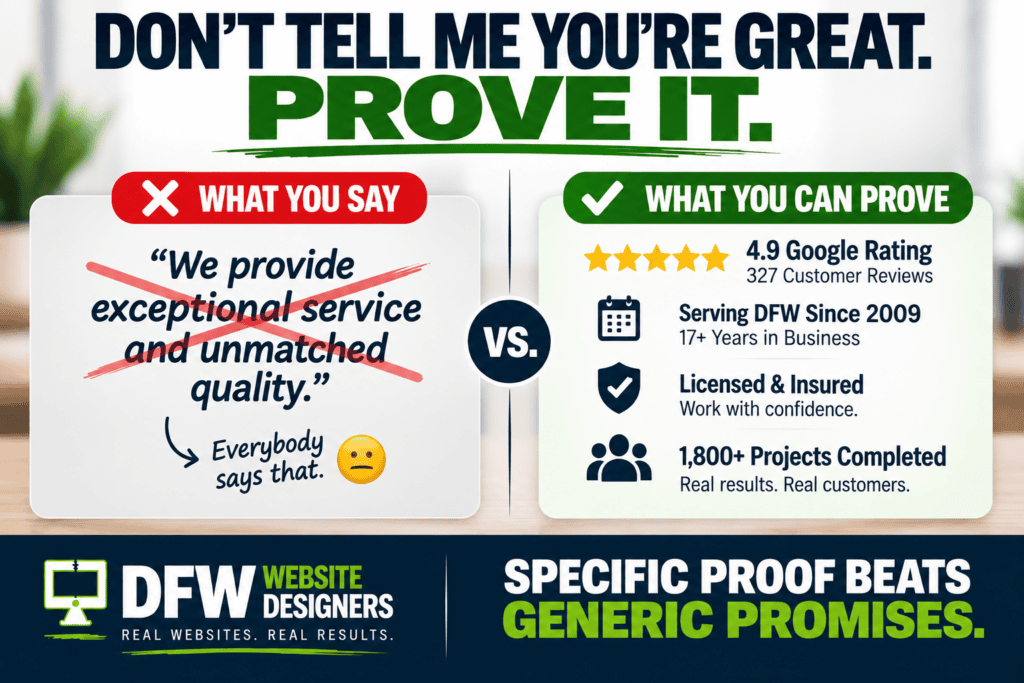
7. You’re Not Building Enough Trust
Visitors don’t know you yet. They’re looking for reasons to trust you. A strong website should provide those reasons quickly. Depending on the business, that might include: Google reviews, Customer testimonials, Years in business, Before-and-after photos, Certifications, Awards, Professional affiliations, Team photos, Completed projects, Guarantees, Community involvement, People don’t contact websites. They contact businesses they trust.
Your website’s job is to establish that trust.
8. You Don’t Have Enough Content
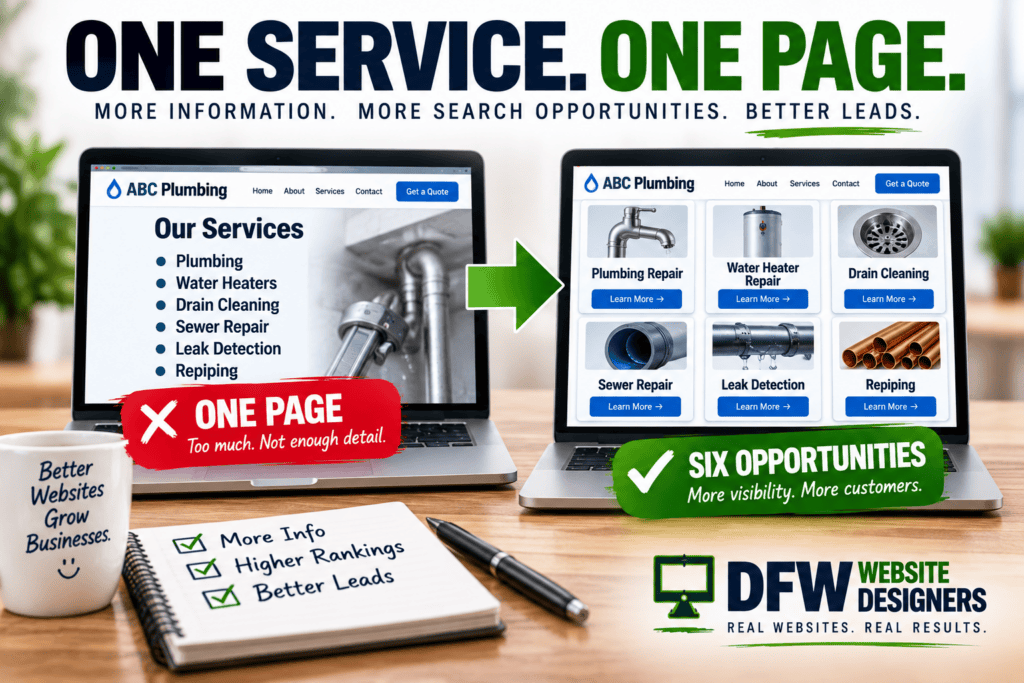
A five-page website may explain your business. But it gives search engines relatively few opportunities to send visitors your way. Imagine a contractor offering ten different services across fifteen different cities. If the entire website consists of Home, About, Services, Gallery, and Contact, how is Google supposed to know all the individual services and communities that company serves?
Dedicated content creates opportunities. That can include: Individual service pages, City pages, Frequently asked questions, Educational blog articles, Project pages & Industry-specific pages. Every useful page gives your website another opportunity to answer a customer’s search.
9. Your Website Hasn’t Changed in Years
When was the last time you added something meaningful to your website? Last month? Last year? Five years ago? Businesses change. Services change. Customers ask new questions. Technology changes. Search changes. Your website should change too.
Regular improvements might include:
- New blog articles
- Updated service pages
- New reviews
- New project photos
- Additional city pages
- Better FAQs
- Updated calls-to-action
- Improved internal links
A website shouldn’t be treated like a brochure you printed ten years ago. It should be an active marketing tool.
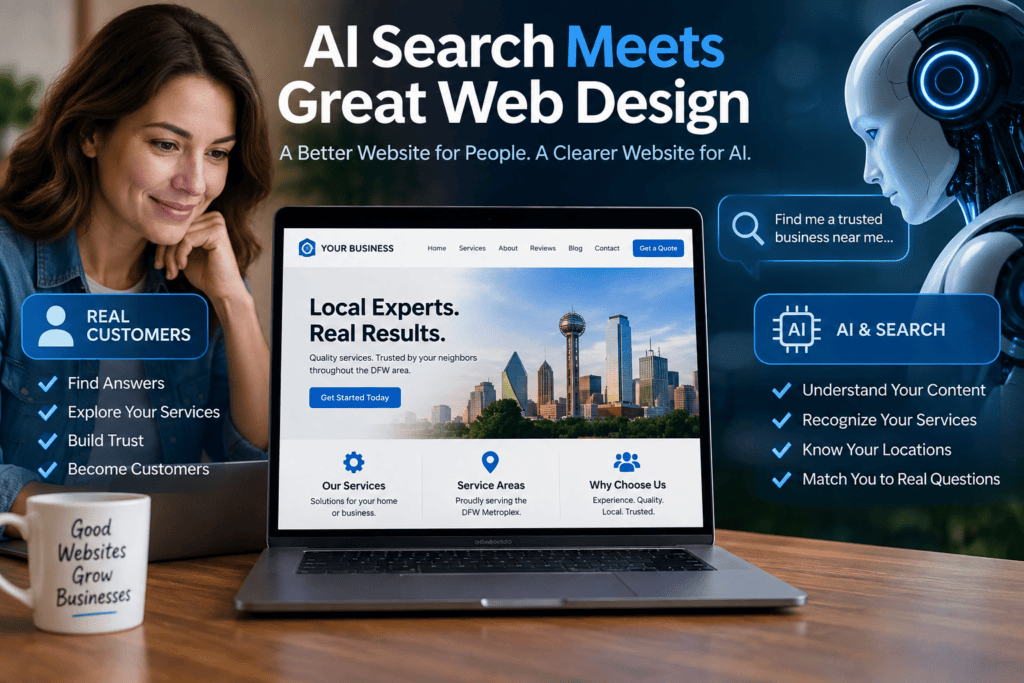
10. Your Website May Not Be Ready for AI Search
Google is no longer the only place customers look for businesses. People are increasingly asking AI assistants questions such as: “Who is a good plumber near me?” “Recommend a website designer for a small business.” “Who installs irrigation systems in my area?” That means websites need to be easy for modern search technologies to understand.
Good AI search readiness starts with many of the same fundamentals as good SEO: Clear business information, Well-organized pages, Helpful original content, Structured data, Logical internal linking, Descriptive headings, Crawlable content, & Accurate information. Emerging tools and standards can also become part of that preparation. AI search doesn’t eliminate SEO. It makes having a clear, technically healthy website even more important.
Looking Good Isn’t the Same as Performing Well
Think about a car sitting in a driveway. It can have beautiful paint. Perfect wheels. A spotless interior. But if the engine isn’t running properly, none of that matters very much.
Websites are similar. Design is what customers see. Performance is what makes the website valuable. You need both.
Don’t Automatically Redesign It
Here’s the good news. If your website isn’t generating enough leads, you may not need to throw it away. Sometimes the foundation is perfectly good. The website simply needs: Better SEO, Stronger calls-to-action, Improved mobile usability, Technical corrections, More content, Better trust signals, Improved indexing, Stronger local SEO & AI search preparation.
That’s a lot less painful than starting over.
Final Thoughts
A website shouldn’t simply look good. It should work. It should help customers find you. It should explain what you do. It should establish trust. It should make contacting you easy. And ultimately, it should help generate business. If your website looks great but isn’t producing leads, don’t immediately assume you need a completely new website.
There may be hidden problems quietly holding it back. Sometimes the best solution isn’t a redesign. Sometimes your website simply needs a tune-up.
Is Your Website Really Search-Ready?
That’s exactly why we created our FREE Search-Ready Tune-Up. We’ll review your website for many of the hidden issues that can affect SEO, mobile usability, indexing, conversions, technical performance, and AI search readiness. Then we’ll explain what we find in plain English. If your website needs a redesign, we’ll tell you. If it simply needs a few strategic improvements, we’ll tell you that too.
Because our goal isn’t to sell you another website. Our goal is to help the website you have generate more business.