Here’s an uncomfortable question. Would you hire your own business based solely on your website? Not because you know the owner. Not because you know how good your employees are. Not because you know you’ve been serving customers for years. Not because you know how much you care about doing great work. Forget everything you know about your company. Pretend you’re the customer. You search Google. You click your website. And this is the first time you’ve ever heard of your business.
Would you call?
That’s a very different way to look at your website. Business owners tend to evaluate their websites based on what they like. Customers evaluate websites based on what they need. And those aren’t always the same thing.
Your Website Isn’t Really for You
This is one of the hardest things for business owners to remember. Your website isn’t primarily for: The owner. The marketing department. The salesperson. The web designer. It’s for the customer. That sounds obvious. But website decisions frequently start with: “I like…” “I like blue.” “I like this picture.” “I like that animation.” “I don’t like that button.” “I want our history at the top.” There’s nothing wrong with having preferences.
It’s your company. Your brand matters. But there’s a more important question: What does the customer need? That’s the question that should drive the website.
Pretend You’ve Never Heard of Your Company
Let’s perform an experiment. Open your website. But don’t look at it like the owner. Look at it like someone who discovered you 30 seconds ago. Ask yourself: What does this company do? Where do they provide service? Do they look legitimate? Can I trust them? Do they have good reviews? Have they done this before? How do I contact them?
If any of those answers require searching, scrolling, guessing, or investigating, your customers may be experiencing the same thing. And unlike you, they have no reason to stick around.
1. Would the First Impression Impress You?
Fair or unfair, first impressions matter. When you visit an outdated website, you notice. When you visit a confusing website, you notice. When a website looks like it hasn’t been touched since the Bush administration, you notice. And yes, I’m leaving it intentionally unclear which Bush. 😄
Your customers notice too. A professional website doesn’t have to look expensive or flashy. It should feel: Current, Clean, Organized, Easy to understand, Mobile-friendly, and Consistent with your brand. Your website is often introducing your company before any employee gets the opportunity. Make sure it’s making the introduction you want.
2. Would You Immediately Understand What the Company Does?
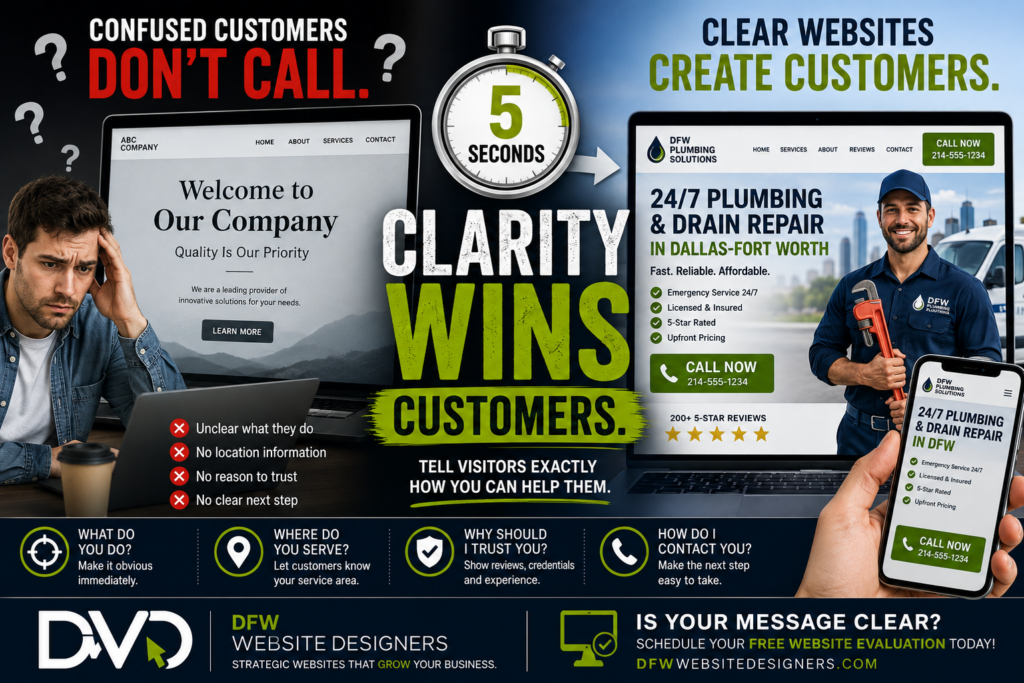
We’ve talked about this before because it’s that important. Customers shouldn’t have to decode your business. Your homepage should quickly explain: What you do. Who you serve. Where you serve. Compare: “Welcome to ABC Company — Excellence Through Innovation.” with: “Commercial & Residential Roofing Throughout Dallas-Fort Worth.” One sounds impressive. The other is useful. Clarity wins.
If you landed on your own homepage without knowing anything about the business, would you understand what you sell within a few seconds?
If not, start there.
3. Would You Trust This Company?
Now pretend you’re considering giving this business your money. What evidence do you see? Not claims. Evidence.
Does the website show:
- Customer reviews
- Real photographs
- Completed projects
- Team members
- Years of experience
- Certifications
- Licenses
- Awards
- Professional memberships
- Guarantees
Every business says it provides great service. Your website should give customers reasons to believe it. If you wouldn’t hire a company that had no reviews, no real photos, no people, and no evidence of experience, don’t expect your customers to.
4. Would You Believe the Reviews?
Reviews are powerful. But presentation matters. A website containing three anonymous testimonials saying: “Great company!” — J.S. isn’t nearly as compelling as authentic customer feedback tied to a recognizable review platform. Whenever appropriate, make it easy for customers to see that real people have done business with you and had a good experience.
You don’t need to claim perfection. In fact, perfection can sometimes look suspicious. What customers really want to see is a pattern: This company consistently takes care of people. That’s reassuring.
5. Would You Be Impressed by the Work?
If your company produces something visual, your website should show it. Imagine hiring a remodeler who doesn’t show remodeling projects. A landscaper with no landscapes. A roofer with no roofs. A photographer with no photographs. Or a website designer with no websites. That would be… awkward.
Your work is evidence. Use it. Show completed projects. Show before-and-after photographs. Show examples. And when possible, explain what customers are looking at. A short project description can transform a photograph into proof of expertise.
6. Would You Be Able to Use the Website on Your Phone?
Now leave your desktop computer. Pull out your phone. Visit your website. This may be the version of your company many customers actually experience.
Ask: Can I read everything? Does the navigation work? Are the buttons easy to tap? Can I find the phone number? Can I call with one tap? Can I complete the form? Does the site load quickly? A website that works beautifully on a giant office monitor but falls apart on a smartphone isn’t doing its job. Your customers don’t care that it looked great during the design presentation. They care whether it works right now.
7. Would You Wait for It to Load?
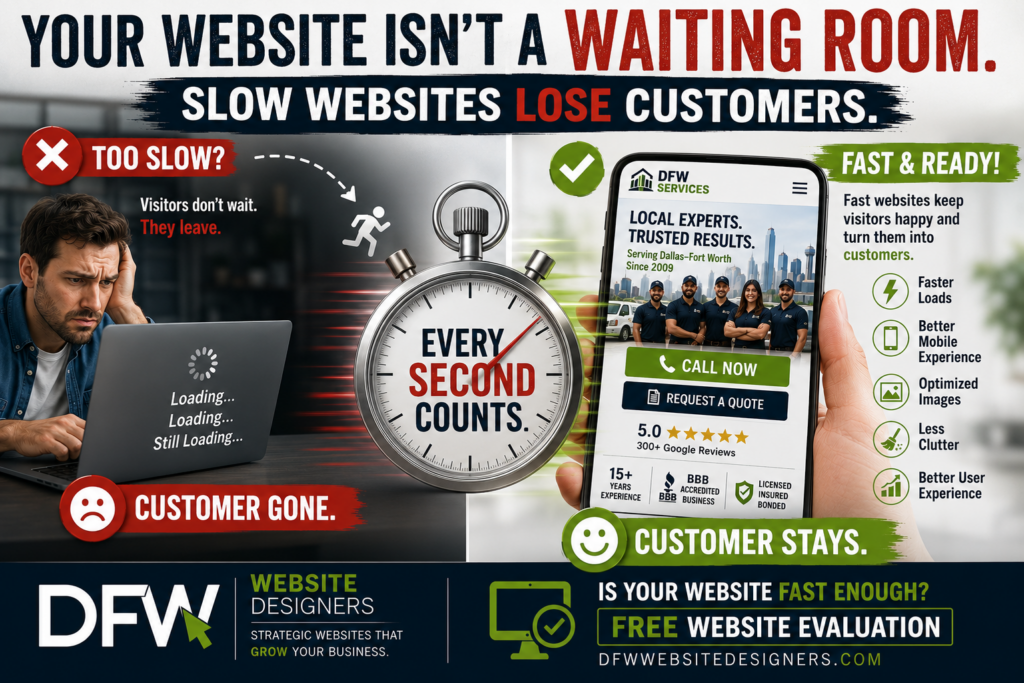
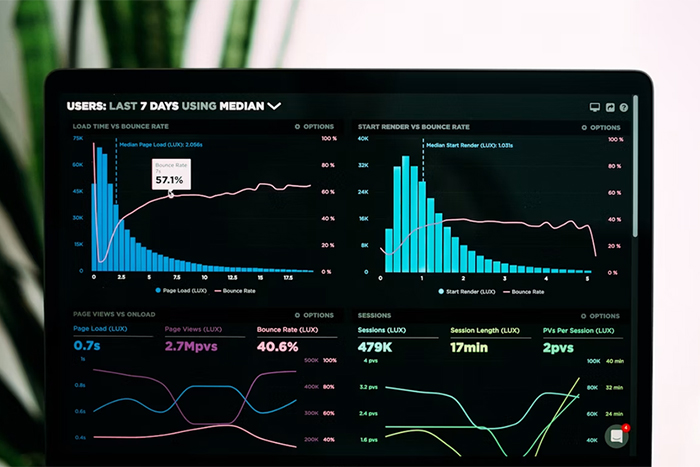
Yesterday we talked about website speed. Now evaluate yours as the customer. Open the site. How does it feel? Not just what does a speed-testing tool say. How does it feel? Does the page appear quickly? Can you interact with it? Are giant images slowly appearing? Does something jump around while the page loads? Do popups interrupt you before you’ve even read the headline? Customers are used to fast digital experiences.
They don’t necessarily know why your website is slow. They simply know they’re waiting. And they don’t have to wait. Google has plenty of other options.
8. Would You Know What to Do Next?
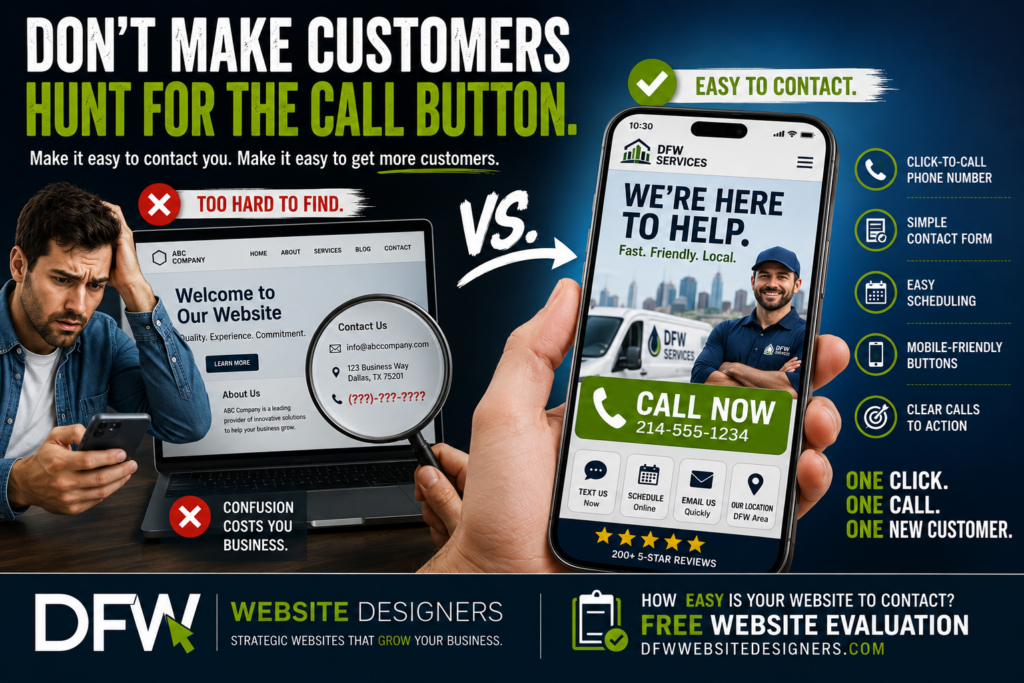
You’ve looked at the services. You’ve read the reviews. You’re interested. Now what? Is the next step obvious? Can you: Call Now? Request a Quote? Schedule an Appointment? Send a Message? Get a Free Estimate? Your website shouldn’t make customers search for the next step. A strong call to action says: “If you’re interested, here’s exactly what to do.” When the customer is ready, get out of their way.
9. Would You Actually Complete Your Own Contact Form?
Here’s a fun one. Fill out your own contact form. You may discover things. Does it ask for too much information? Is it difficult on a phone? Are there confusing fields? Does it work? Where does the message go? Do you receive a confirmation? Does anyone at your company actually get notified? How quickly does someone respond? You may have a beautifully designed lead-generation machine that sends every inquiry directly into an email account nobody has checked since 2023.
That’s less than ideal. Test the entire process.
10. Would You Choose Yourself Over Your Competitor?
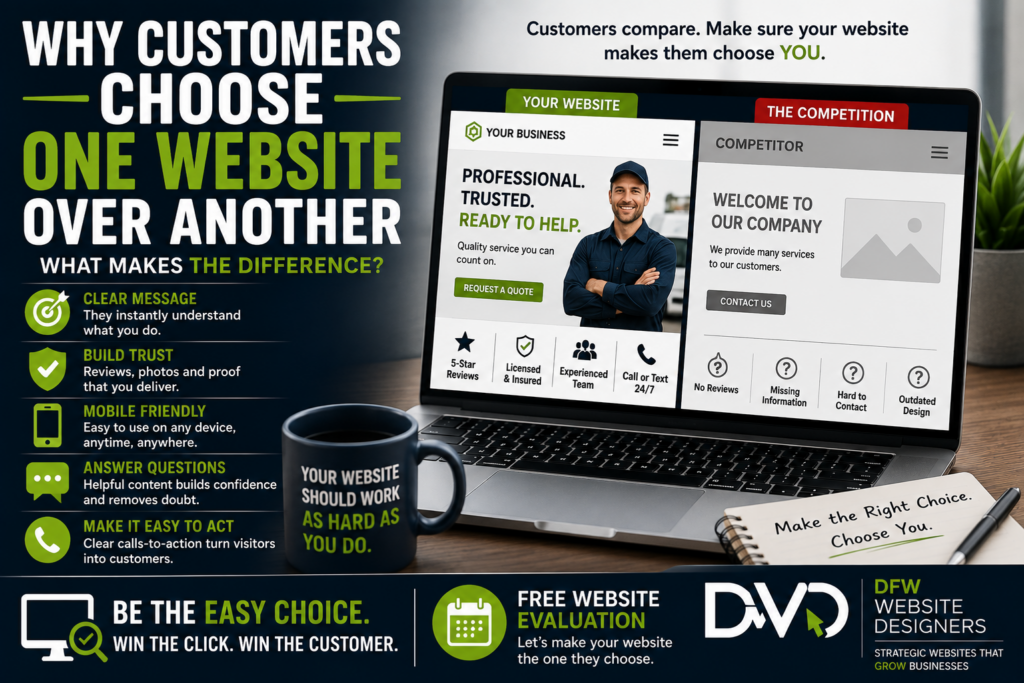
Now we get to the big test. Open your website. Then open two or three competitors. Put them side by side. Forget which company you own. Compare: Design Clarity Reviews Trust Project examples Mobile experience Speed Ease of contact Calls to action Now ask: Which company would I call first?
Don’t automatically choose yourself. That’s cheating. 😄 Be objective. If a competitor’s website gives you more confidence than your own, that’s valuable information. It doesn’t necessarily mean they’re a better company. It means they’re presenting themselves better online. And that’s something you can fix.
The Customer Knows Less Than You Think
Here’s the fundamental problem. You know too much about your company. You know your history. You know your reputation. You know your employees. You know your accomplishments. You know your customers. You know the quality of your work. A new visitor knows none of that. They only know what they can see.
Your website’s job is to close that information gap. It needs to communicate enough of what you know so that the customer begins to understand why your business deserves consideration.
Your Website Is Part of Your Sales Team
Imagine hiring a salesperson who: Couldn’t clearly explain your services. Never mentioned your reviews. Didn’t show examples of your work. Made customers wait. Couldn’t answer basic questions. And hid their phone number. How long would that salesperson remain employed?
Probably not long. Yet businesses sometimes tolerate those exact problems on their websites for years. Your website may interact with more potential customers than any employee in your company. Give it the tools to do the job.
Give Yourself a Website Report Card
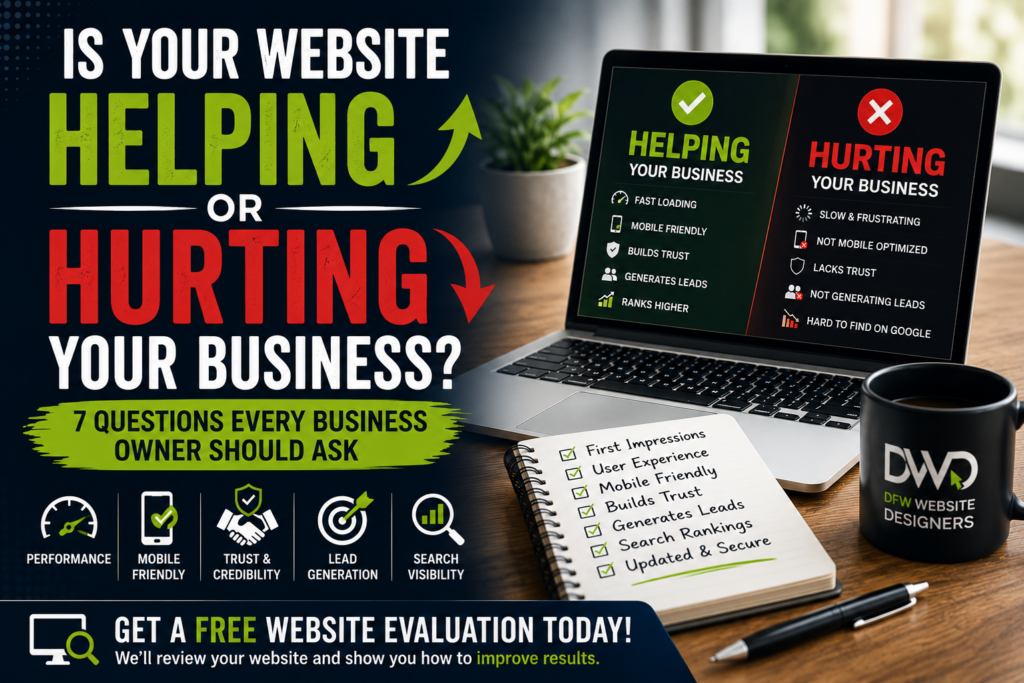
Score your website from one to five in these areas:
First Impression: ⭐⭐⭐⭐⭐
Clarity: ⭐⭐⭐⭐⭐
Trust: ⭐⭐⭐⭐⭐
Reviews: ⭐⭐⭐⭐⭐
Real Photos: ⭐⭐⭐⭐⭐
Mobile Experience: ⭐⭐⭐⭐⭐
Speed: ⭐⭐⭐⭐⭐
Easy to Contact: ⭐⭐⭐⭐⭐
Calls to Action: ⭐⭐⭐⭐⭐
Competitive Advantage: ⭐⭐⭐⭐⭐
Now look at the lowest scores. That’s where I’d start. You may not need an entirely new website. Sometimes a handful of strategic improvements can significantly change the customer’s experience.
See Your Website Through Your Customer’s Eyes
This week we’ve talked about several pieces of the customer journey. Your website needs to be clear. It needs to make contacting you easy. It needs to establish trust. It needs to perform well. But all of those ideas come back to one principle: Your website isn’t for you. It’s for them. The customer. The person with the problem. The person comparing companies. The person deciding whom to trust. The person who may become your next customer. Design the experience for that person.
Would You Hire Your Own Business?
Now answer the original question. If you knew nothing about your company… If you discovered it through Google today… If all you had to evaluate the business was its website… Would you hire yourself? If the answer is yes, fantastic.
If the answer is “maybe,” there’s work to do. And if the answer is no? At least we’ve found the problem.
Get a FREE Website Evaluation
At DFW Website Designers, we spend a lot of time looking at websites from the customer’s perspective. Not simply: “Does this look nice?” But: “Will this help the business generate customers?” We help businesses with:
- Professional Website Design
- Website Redesigns
- Website Hosting & Maintenance
- Local SEO
- SEO Blogging
- Landing Pages
- Google Business Profile Optimization
- AI Receptionists
- Lead Generation Strategies
Want another set of eyes on your website? Schedule a FREE Website Evaluation with DFW Website Designers. We’ll look at your website from a potential customer’s perspective and identify opportunities to improve your first impression, credibility, usability, and ability to generate leads.
Be the customer for five minutes. You might see your website completely differently.